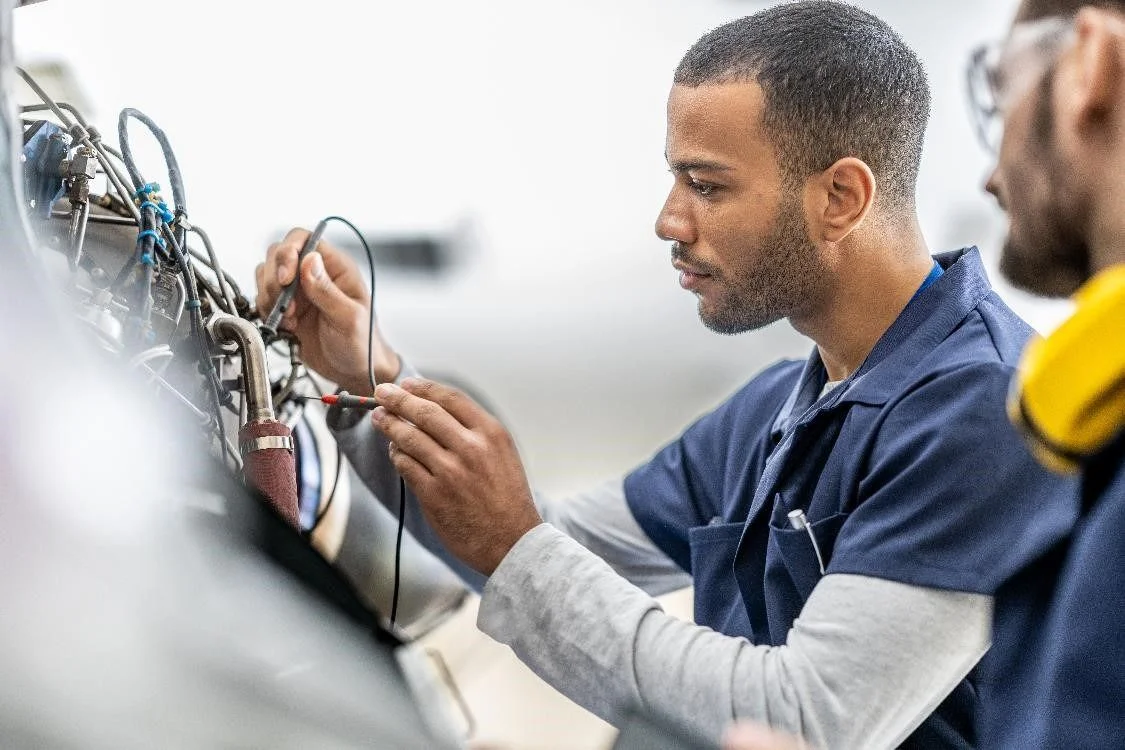
Maintenance Engineers are essential in ensuring the reliability and efficiency of mechanical systems, machinery and electrical equipment. They are responsible for the installation, maintenance, and repair of systems in various settings, including industrial, commercial, and residential environments. This role requires a deep understanding of electrical principles, strong problem-solving skills, and the ability to work safely and efficiently.
Typically, roles for Maintenance Engineers highlight duties such as conducting routine inspections, diagnosing and fixing faults, and performing preventative maintenance. You may also be involved in installing new systems, upgrading existing ones, and ensuring compliance with safety regulations. Maintenance Engineers must be proficient in reading and interpreting diagrams, using diagnostic tools, and following strict safety protocols.
Employers often seek candidates with a recognised engineering qualification, such as a National Vocational Qualification (NVQ), Higher National Certificate (HNC), or degree in mechanical or electrical engineering or a related field. Experience in a similar maintenance role is usually preferred, though there are some entry-level positions available that can offer training. A strong understanding of health and safety regulations, electrical and mechanical systems, and technical drawings is also important.
In addition to technical skills, Maintenance Engineers need to be adaptable and able to work under pressure. The most successful Maintenance Engineers are those who can combine technical proficiency with excellent customer service, ensuring that clients' needs are met efficiently and professionally. You may be required to travel frequently, work irregular hours, and respond to emergency calls. A valid driving licence is often important to support this, allowing you to work in multiple locations.
Read more about the broader Engineer job description.