View All Career Support

Your Payslip Explained

Payslips can be confusing if you don’t know what to look for. Our guide breaks down each section, from gross pay and deductions to tax codes and pay periods, helping you understand exactly how your wages are calculated and ensuring you’re being paid correctly.

When people receive a payslip, most of them simply have a quick look at the bottom right-hand corner to find out how much is going to hit their bank account. But it is also a good idea to know what all the different parts of a payslip are and what each of them means.

If you understand what you are looking at, you can make sure that not only are you being paid the right amount, but also that you are being taxed correctly and that your pension payments are being made.

What is a Payslip?

A payslip is a document given by an employer that shows exactly how your wages or salary have been calculated for a specific pay period. It explains what you earned before deductions, what has been taken off, and what you actually receive in your bank account as take-home pay. In the UK, employers must provide payslips to employees and workers on or before payday, whether they are paid weekly, fortnightly, or monthly.

Our payslip breakdown helps you understand important details such as gross pay, net pay, PAYE, National Insurance contributions, pension payments, and tax codes. It may also include overtime, bonuses, commission, or statutory payments such as sick pay or maternity pay.

Understanding the information on a payslip can help you to spot mistakes early and make sure you are being paid correctly. It also gives you a useful benchmark when planning a weekly or monthly budget. Payslips are also crucial for proving your income when applying for a mortgage or tenancy, and can be used in conjunction with other documents as proof of identity.

A payslip may look complicated at first, but each section is there to explain how your final pay has been worked out, and to help protect both you and your employer from payroll disputes. Reading your payslip fully every time you receive one helps you understand exactly where your money goes and gives you confidence that your wages have been processed fairly and correctly every single time.

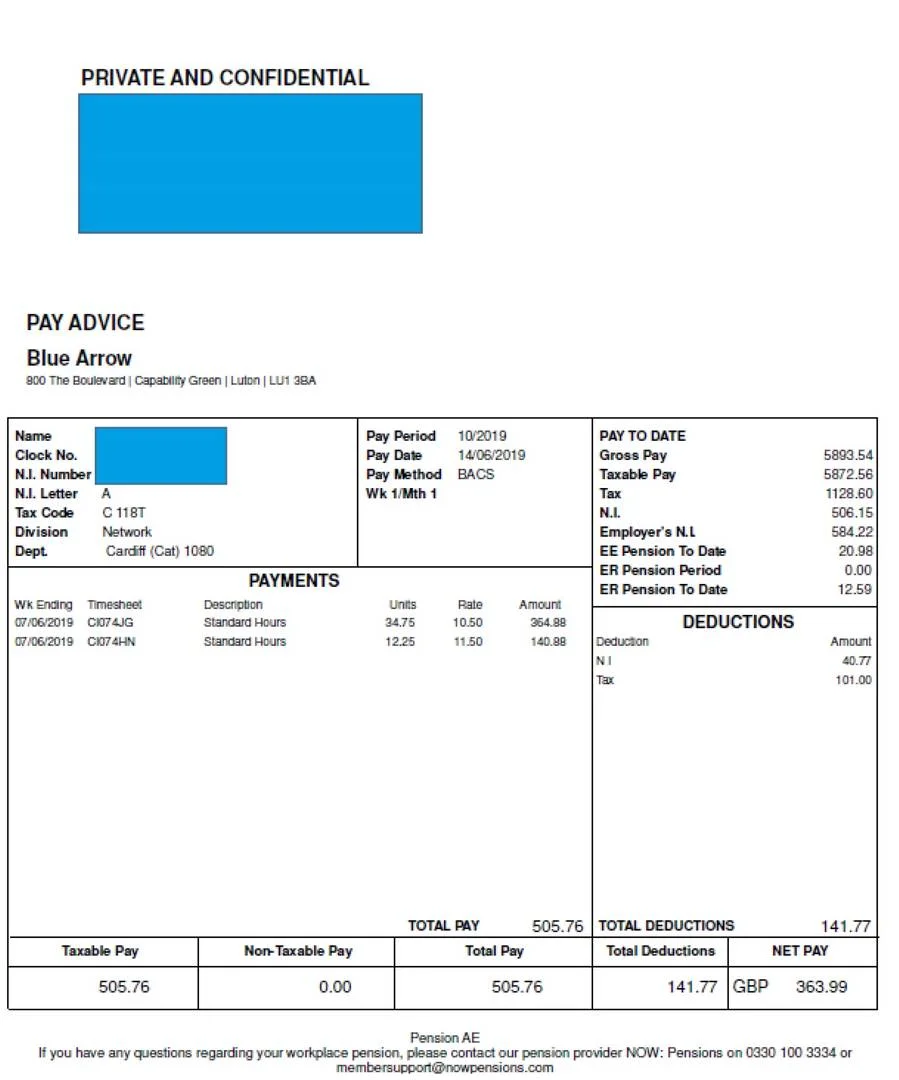
Example Payslip

See the example of a Blue Arrow payslip below for a clear visual breakdown of the main sections and common payslip abbreviations that UK employers use.

What Information is on a Payslip?

A payslip contains key information about your earnings, deductions, tax, pension contributions, and payment dates, so you can clearly understand how your final take-home pay has been calculated.

Personal Details

Including personal details confirms that the payslip belongs to you. These usually include your full name, employee number, payroll number, and sometimes your job title or department. You may also see your National Insurance number and your employer’s name.

Checking these details is important, because payroll mistakes can happen, especially if there are employees with similar names. If the wrong information appears here, it could affect your tax records, pension contributions, or proof of employment at a later date.

Pay Period and Payment Date

This section tells you which dates your pay covers and when the money should reach your account. For example, it may show that your wages cover the first to the last day of the month, with payment made on the final working day.

Reviewing this helps you match your hours worked, overtime, holiday pay, or shift allowances to the correct period. It also makes it easier to identify missing payments or delays if your salary looks different from what you were expecting.

Gross Pay

Gross pay is the total amount you earn before any deductions are taken away. This includes your basic salary or hourly wages, plus any overtime, commission, bonuses, holiday pay, or statutory payments where applicable.

People often compare gross pay with net pay and wonder why the figures are so different. Gross pay is your full earnings before tax, National Insurance, pension contributions, student loan repayments, or other authorised deductions reduce the final amount you receive. Net pay is simply the total you receive after these deductions are applied.

Deductions

Deductions show the amounts taken from your gross pay before your final salary is paid. Common deductions include Income Tax, National Insurance, student loan repayments, pension contributions, and sometimes union fees or salary sacrifice schemes.

Payslip abbreviations that employers in the UK use can vary, so you may see shortened terms such as PAYE, NI, or pension initials. Understanding your payslip tax details helps you check whether the right amount has been deducted and whether your take-home pay is accurate.

Pension Contributions

If you are enrolled in a workplace pension, your payslip should show how much you and your employer are contributing. This may appear as a percentage of your salary, or as a fixed amount each pay period.

Pension deductions reduce your take-home pay, but they help build your long-term retirement savings. Reviewing this section regularly is useful because it confirms contributions are being paid correctly and that your employer is meeting their legal responsibilities under automatic enrolment rules.


Check Your Expected Pay

Use our salary calculator tool to work out how much you expect to receive in take home pay after tax and other deductions. This way, you will be better placed to spot any errors on your payslip.

How to Read Your Payslip

Reading your payslip becomes much easier when you review it in sections rather than trying to understand everything at once. It’s best to start with your earnings, then move to deductions, and finally check for any mistakes or unexpected changes.

Understanding Your Earnings

Start by reviewing the earnings section line by line. Check your basic pay first, then look for overtime, bonuses, commission, holiday pay, or statutory payments such as sick pay. Make sure the hours worked and rates of pay match what you agreed with your employer.

If you are paid hourly, compare your payslip with your rota or timesheet. Salaried employees should check whether deductions for unpaid leave or changes to contracted hours have affected the total. A clear payslip explanation makes it easier to confirm your gross pay is correct before reviewing deductions.

This check is especially useful after a pay rise, promotion, or change in shift pattern, because errors often happen when payroll details are updated.

Understanding Your Deductions

Next, review everything taken from your gross pay. Income Tax and National Insurance are usually the largest deductions, but you may also see pension payments, student loan repayments, child maintenance, charity donations, or recovery of previous overpayments.

Check your tax code carefully, because an incorrect code can lead to paying too much or too little tax. “PAYE” on payslip records refers to Pay As You Earn, the system used by HM Revenue and Customs to collect tax directly from your wages. If something looks unusual, ask payroll for clarification quickly.

Understanding what different payslip units and deduction labels mean prevents confusion and helps you budget more accurately each month. It also makes conversations with payroll easier because you can refer to the exact line item instead of describing the issue generally.

Checking for Errors

Compare your current payslip with previous ones if your take-home pay suddenly changes without explanation. Look for missing overtime, duplicated deductions, incorrect tax codes, or pension amounts that seem wrong.

Also check personal details, National Insurance information, and the payment date. Even small payroll mistakes can create larger problems later with tax records or benefit applications. Keeping copies of each payslip helps you to raise any concerns with some supporting evidence, and makes corrections much easier for your employer to process.

If you notice a problem, report it promptly rather than waiting for the next pay cycle to see if it fixes itself. Saving emails, rotas, and approved overtime records alongside your payslip gives you stronger evidence if a correction or back payment is needed.

Understand Your Tax Code

Read our guide to understanding the different tax codes and what the different letters and numbers mean when it comes to how much tax you pay.

Why Payslips Matter

Payslips are more than a record of your monthly pay. They are important financial documents that support various applications, protect your tax history, and help you identify payroll issues before they become expensive problems.

Proof of Income

Payslips are often requested as proof of income when you apply for a mortgage, rent a property, or request a loan. Landlords, lenders, and financial providers all use them to confirm your earnings are regular and reliable.

Most payslips from UK employers show not only your salary, but also the consistency of your income over time. This can be especially important if you work temporary shifts, receive commission, or have variable hours. Keeping recent payslips organised can save you time when important financial applications need supporting documents quickly.

Many organisations will ask for the latest three to six months of payslips, so keeping digital copies is a practical habit. This simple record can speed up applications and reduce delays caused by missing employment evidence or unclear income history.

Tax Records

Your payslip provides an ongoing record of the tax and National Insurance you have paid throughout the year. This information helps you understand your annual earnings and supports your records if HM Revenue and Customs asks questions later.

Payslip tax information also helps when checking your P60, changing jobs, or applying for benefits. If your tax code changes unexpectedly, your payslip can help identify when it happened. Keeping old payslips means you have evidence available if a dispute about deductions arises in the future.

This is particularly helpful during self-assessment checks or when correcting information after moving employers. It also supports conversations with payroll if you believe a refund or adjustment should be made before the tax year ends.

Identifying Payroll Mistakes

Mistakes in payroll can happen for many reasons, including incorrect hours, missing overtime, wrong tax codes, or duplicate deductions.  Checking your payslip regularly helps you to spot these issues before they become bigger financial problems.

A small error repeated over several months can have a significant impact on your income. By checking every payslip your employer provides, you can raise concerns quickly and give payroll clear evidence. Early action usually makes corrections faster and prevents future underpayments or overpayments.

It also helps protect pension records and statutory payment calculations from avoidable administrative errors. Regular checking reduces stress and helps ensure that you are paid correctly for every hour worked and every entitlement earned.

Common Payslip Questions

Why is My Take-Home Pay Lower Than Expected?

Your take-home pay may be lower because of higher tax deductions, pension contributions, student loan repayments, unpaid leave, or reduced overtime. A tax code change can also affect your net pay, so always check your latest payslip explanation carefully.

What Should I Do If My Payslip is Wrong?

If your payslip is inaccurate, speak to your payroll team or manager as soon as possible and explain the issue clearly. Keep copies of your payslip, rota, and any supporting emails so you have evidence if a correction, refund, or back-payment is needed.

Do Temporary Workers Get Payslips?

Yes, temporary workers will still receive payslips if they are paid through payroll. Whether you work weekly shifts or short-term contracts, your employer or agency must show your pay, deductions, and tax information clearly.

When Will I Receive a Payslip?

You should receive your payslip on or before payday. Some employers provide paper copies, while others use online payroll portals. If your payslip is missing, contact payroll quickly so any issue can be resolved before payment delays continue.