View All Job Descriptions

Stress Engineer Job Description

Learn what Stress Engineers do in aerospace & defence, the analysis tools they use and how to get into the role, from qualifications and CV tips to career progression.

Thinking about a career as a Stress Engineer? This specialist engineering role ensures that airframes, components, and structures are strong, safe, and efficient across their entire service life. Here, we’ll walk through what a Stress Engineer does day‑to‑day, how to become one, what to put on your CV, and the related roles you might explore across defence aviation, design, and structural analysis.

What Is a Stress Engineer?

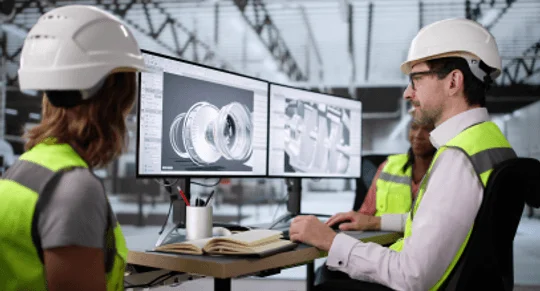
A Stress Engineer is an essential member of a military avionics engineering team. You will be responsible for evaluating whether aircraft structures and components can withstand operational loads, extremes, and fatigue over time. Working on fixed‑wing, rotary‑wing, and mission systems, you’ll frequently conduct finite‑element analysis (FEA) and test evidence to demonstrate structural adequacy, durability, and damage tolerance.

Day‑to‑day, you’ll be involved in interpreting load cases and boundary conditions from performance, flight loads, and mission profiles, as well as assessing for strength, stiffness, stability, fatigue, and damage-tolerance – all vital for the safety and security of military aircraft fleets and assets. You will also build and validate structural models, substantiate new designs and repairs, produce reports for design reviews, and support in-service fleets by investigating defects, among other checks. This role is perfect for engineering professionals with a keen eye for detail and strong reporting skills.

You’ll collaborate closely with Design Engineers, Systems/Flight Loads, Materials and Processes, Airworthiness, Manufacturing, and Maintenance, Repair, and Operations (MRO) teams. The work is rigorous and evidence-led, ideal for engineers who enjoy analytical problem‑solving and turning complex data into clear engineering justifications.


Similar Jobs to Stress Engineer

Stress Engineers build deep structural expertise that transfers across design, certification, and in‑service support. Some similar jobs you might want to consider in the aerospace and defence industries include Structural Analysis Engineer, Fatigue and Damage Tolerance Engineer, or Airworthiness Engineer. You will work closely with a variety of teams and engineering specialists within the role, providing a key opportunity to progress or learn new skills.

Other Jobs in Aerospace & Defence Engineering

Whether you’re planning your career progression pathways or exploring a change in career, there are plenty of other jobs in aerospace and defence environments. Related roles could include Structures Engineer, Structural Integrity Engineer, Airframe Repair Engineer, and Loads and Dynamics Engineer.

With experience, most Stress Engineers move into more senior, supervisory, or managerial positions. Common progression routes include Senior/Principal Stress Engineer, Structures Team Lead, Chief Engineer (Structures), or Airframe Authority roles. There are also pathways into digital engineering, automated analysis methods, or materials and processes specialisms.

Apply for Stress Engineer Jobs Near You

Stress Engineer roles are available across the UK with defence primes, aircraft original equipment manufacturers (OEMs), MROs, and specialist consultancies. Opportunities span new product development, modification programmes, life‑extension projects, and operational support for in‑service fleets. Depending on the programme and security needs, roles may be hybrid, site‑based, or co‑located with Ministry of Defence (MoD) or customer teams. Top locations hiring Stress Engineers include Bristol, Yeovil, Stevenage, Gloucester, and areas of Scotland.

Search our latest jobs

Stress Engineer Job Description FAQ

Is a Stress Engineer a Good Career Choice?

Yes, a Stress Engineer is a respected, technically rewarding path with consistent demand in defence programmes, modernisation efforts, and life‑extension projects. You’ll work on meaningful, safety‑critical engineering with tangible impact.

What Skills Does a Stress Engineer Need?

When it comes to becoming a Stress Engineer, you will need strong fundamentals in structural mechanics, fatigue/fracture, and materials. You will also need proficiency with FEA and hand‑calcs, clear technical writing, and collaborative problem‑solving with design, test, and airworthiness teams.

What Are the Biggest Challenges of the Role?

Some of the biggest challenges you will face as a Stress Engineer include balancing performance, mass, manufacturability, and safety margins under tight schedules, as well as correlating models to complex tests and maintaining traceable, audit‑ready analysis evidence across evolving designs.

What Personal Qualities Make a Great Stress Engineer?

Great Stress Engineers are analytical, meticulous, and pragmatic. They question assumptions, explain complex results clearly, and maintain high standards of quality and documentation under pressure.